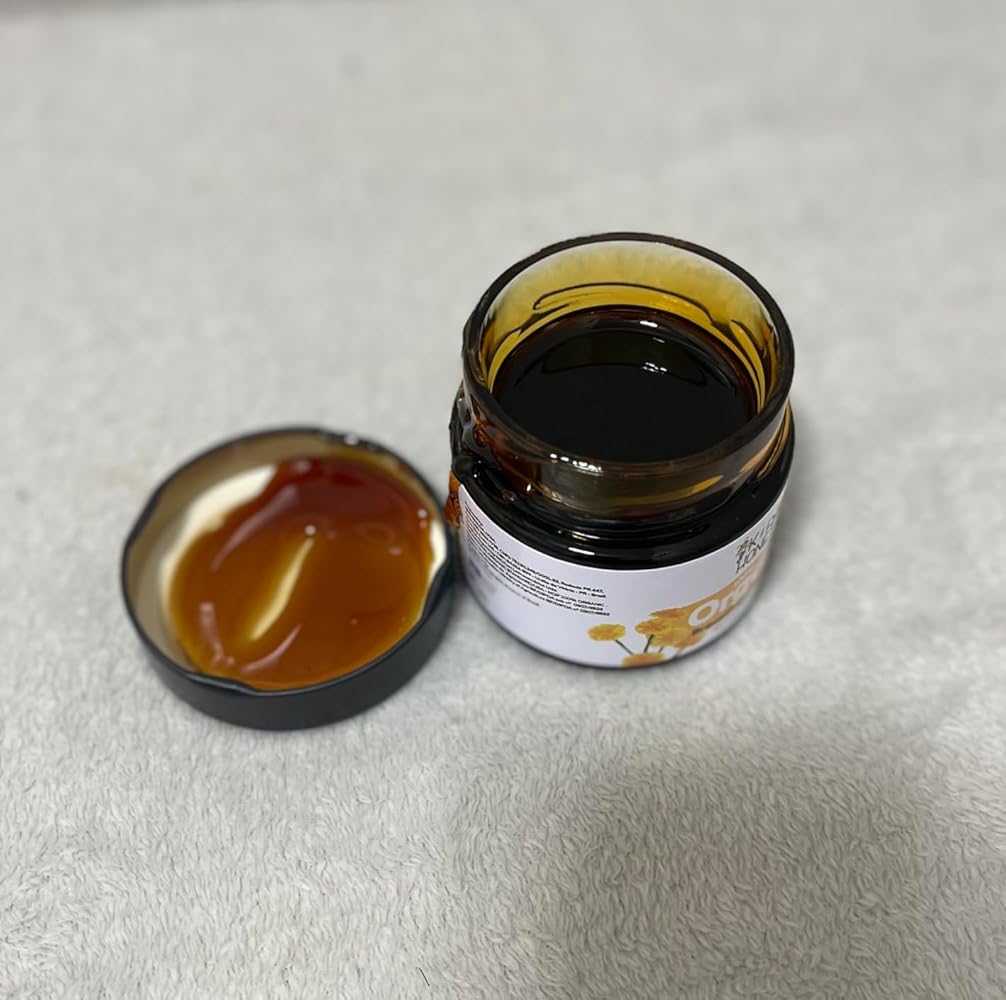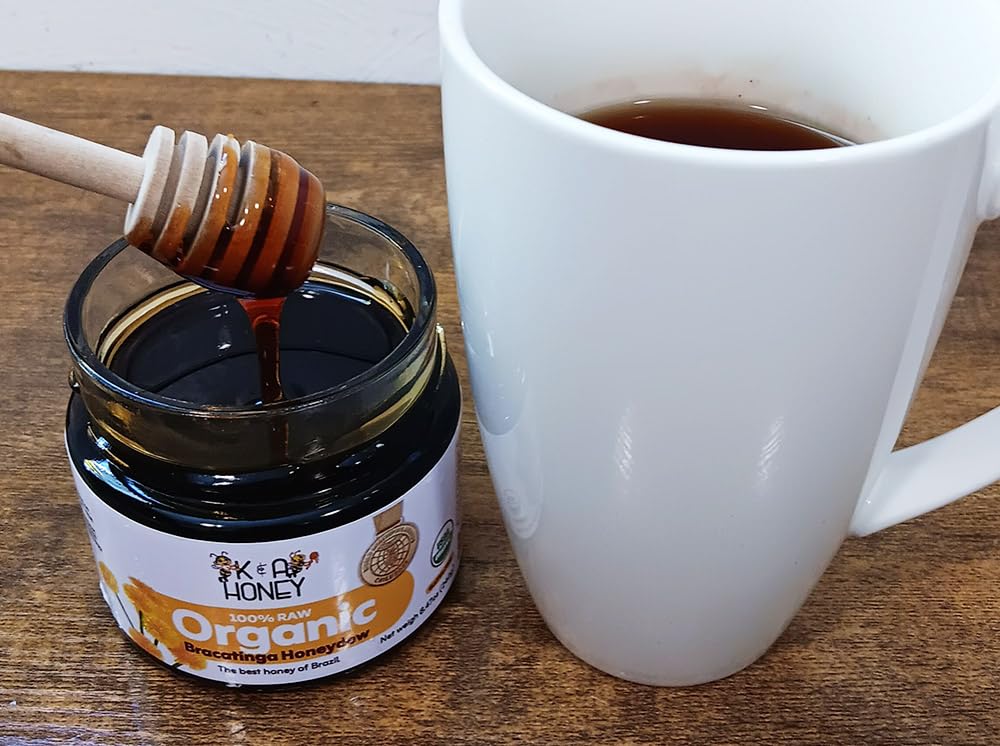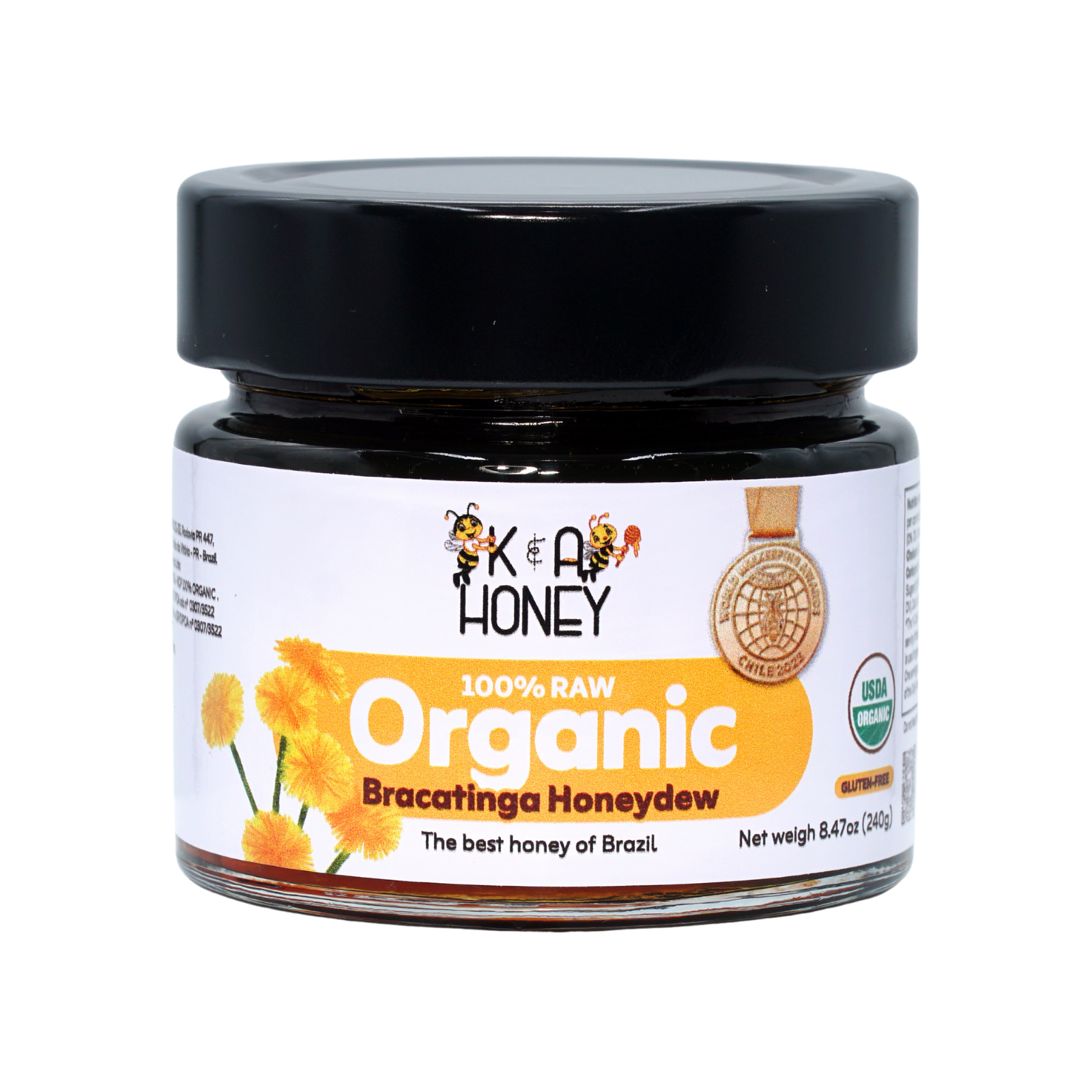
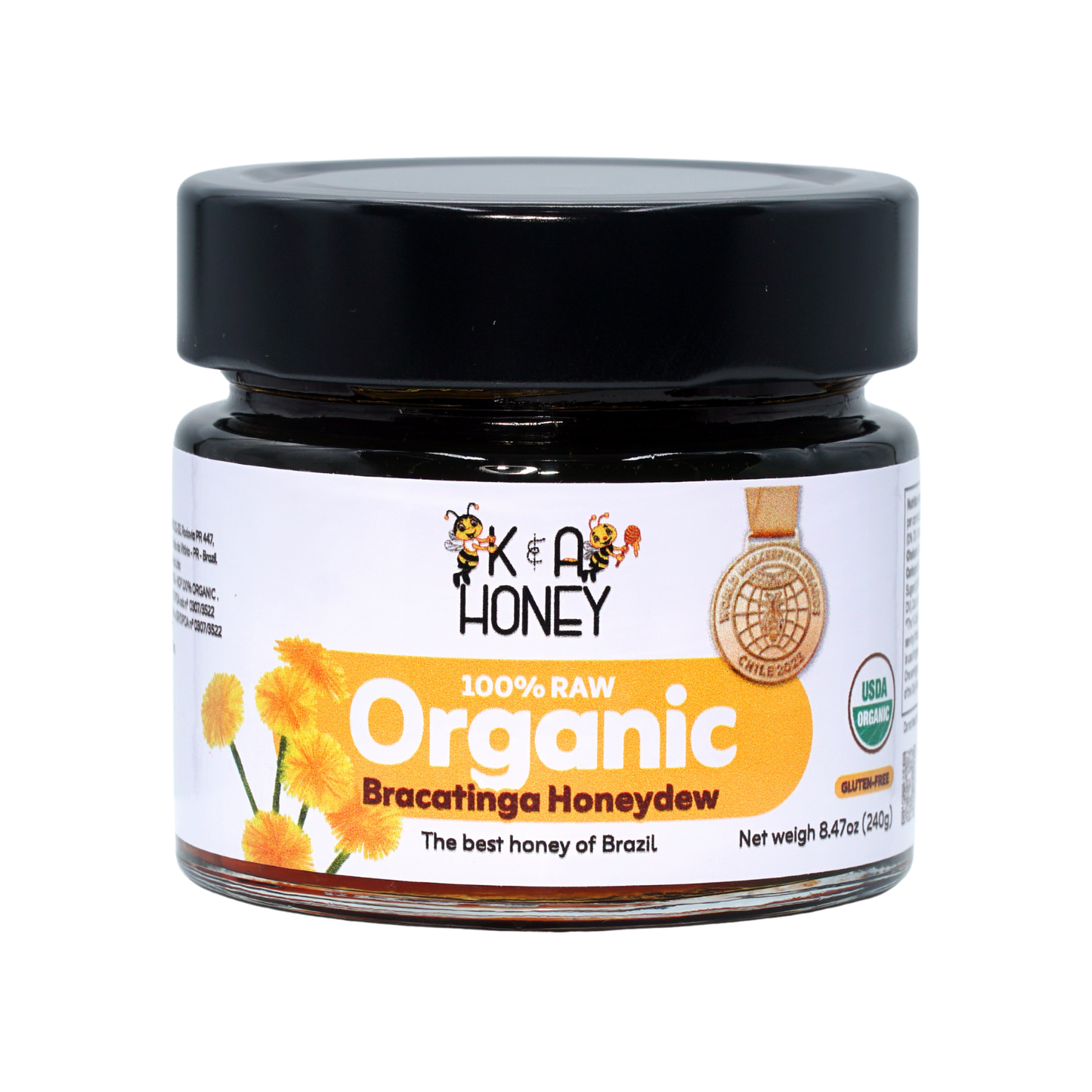
I've had many types of honey in the past, but this was my first experience with Bracatinga honey. It apparently has some things in common with Manuka honey in that it has a higher nutrient density and unique properties based on the bees that create it collecting nectar from the Bracatinga tree blossoms. It is a much darker and thicker honey than most that I've tried before, but it is still liquid (it's not creamed for thickness). The texture is very smooth and velvety. The flavor has the honey taste you'd expect with more intensity and a finishing flavor which is hard to describe. Unlike Manuka honey, which can have a medicinal or herbal finish, this has a slightly "fermented" finishing flavor which is unique, but not unpleasant. It is less aromatic than conventional honey, but has a stronger flavor so you don't need to use much of it to get the taste.This is, undoubtedly, very good quality honey with a high concentration of nutrients. It's not something that you consume just for the sweetening properties. That makes the question of value for money harder to consider since you're paying a bit more, but you're getting something which acts as a supplement as well as food. I found that it was really enjoyable when I added it to tea and I felt better about using it than something like sugar or conventional honey.